
Loading page
Dec 19, 2025 · 1 min read
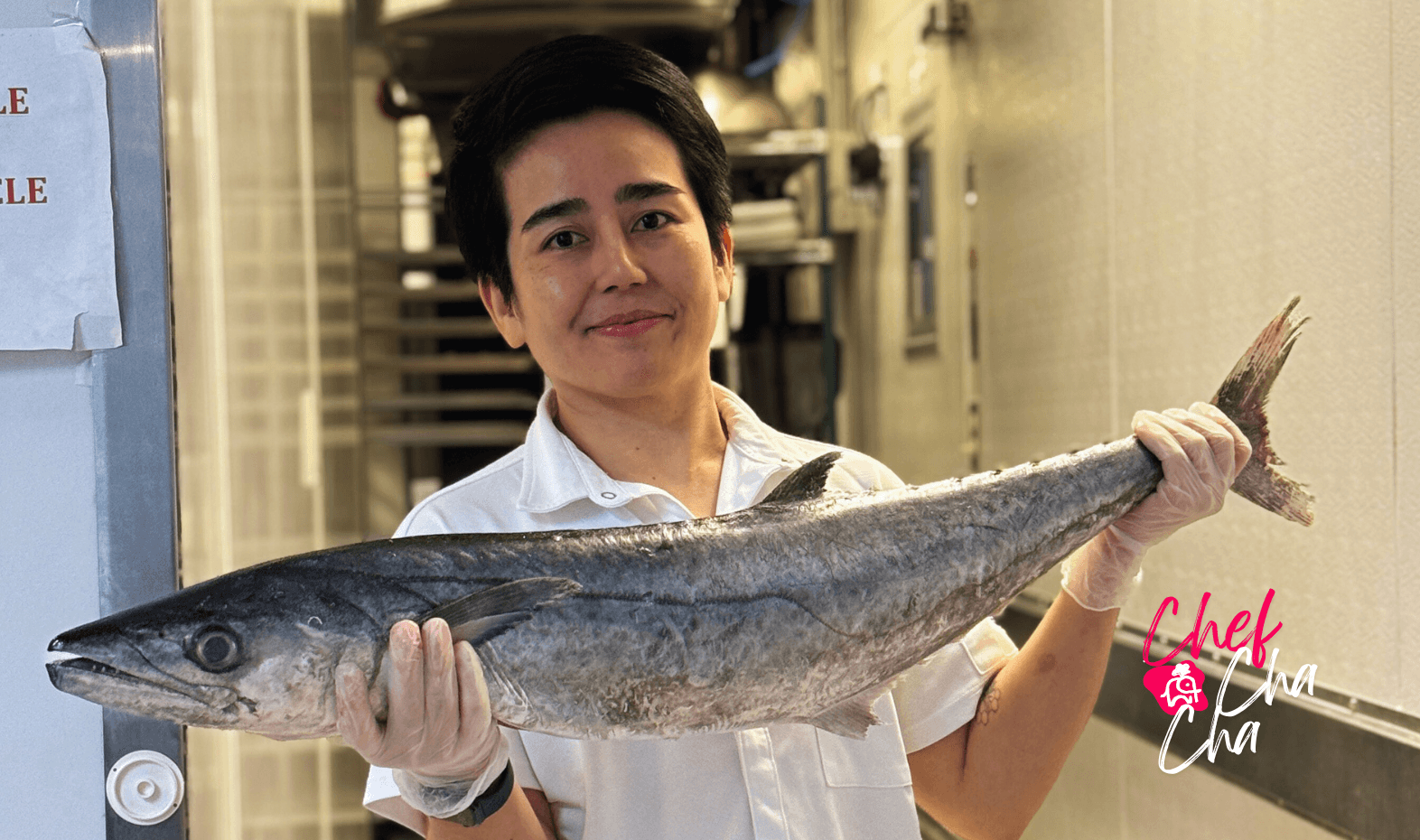
Before Michelin guides and New York food critics noticed her, before Chalong earned its Bib Gourmand and before Unglo or Godunk came to life, Chef Nate Limwong was a young girl cooking because life demanded it.
“I cooked whatever was in front of me. Wrong, right — didn’t matter. Someone had to cook.”
Born in Surat Thani — a region defined by Southern Thai culture and some of the freshest seafood in the country — Nate grew up surrounded by flavors far older and louder than she was. Her childhood wasn’t about culinary inspiration; it was about responsibility. She cooked to help. She sold food to earn. She learned instinctively.
“Thai food? It was just what people in my neighborhood cooked,” she laughs.
During school breaks, she sold food with her cousins who returned from Bangkok. They set up stalls in front of the house. At first, relatives invested. Later, the money became hers.
“It made me happy because I could earn my own money — and spend it however I wanted,” she says.
Each break, she sold something different: fish balls, soy milk, grilled sticky rice, snacks around local card games. These weren’t “business plans” — they were early lessons in independence, reading people, and taking responsibility.
Those sensory memories and survival-driven habits still live inside Chalong’s deepest flavors.
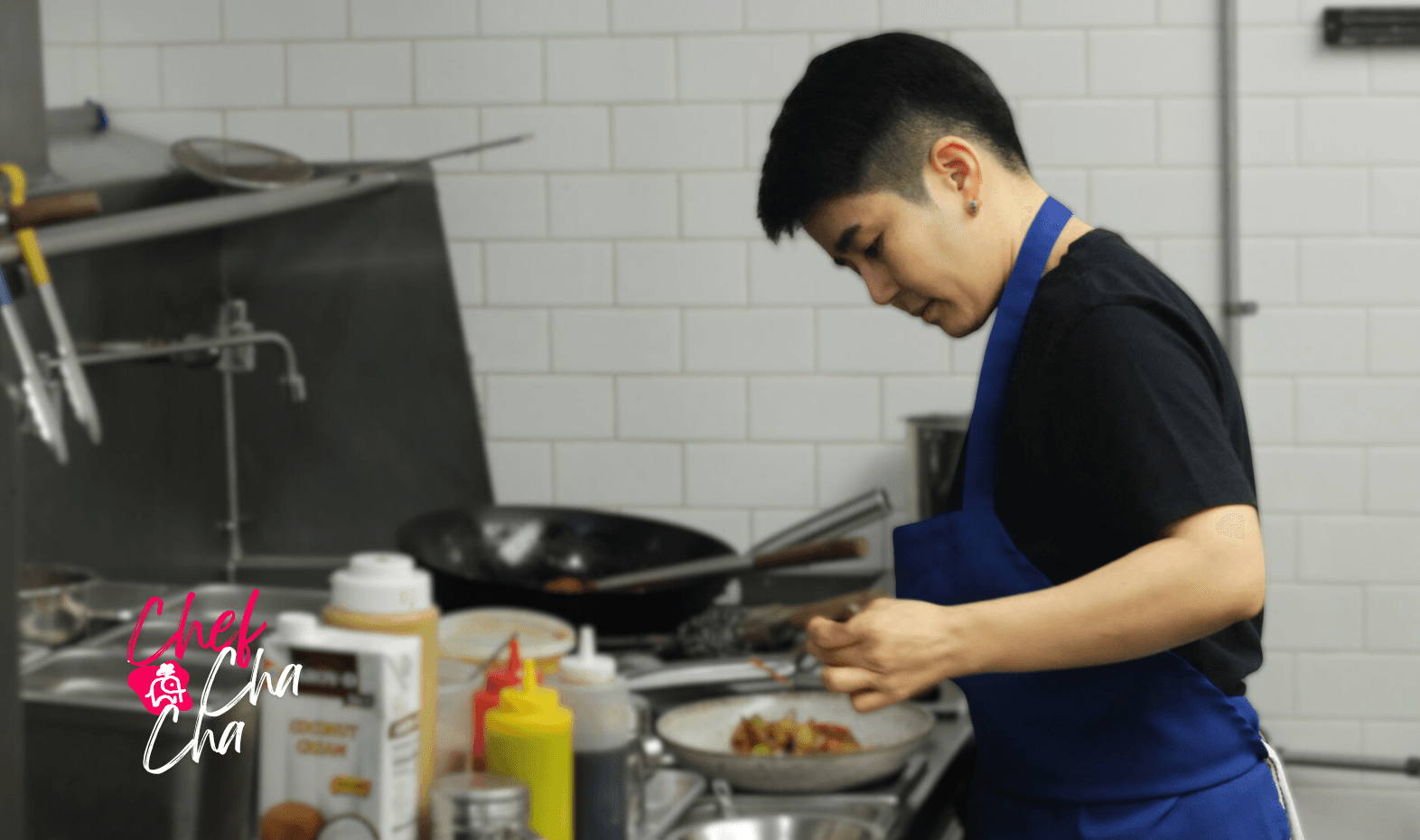
After graduating in , she entered a formative period working inside a large retail group during the launch of a major shopping complex.
“I went wherever my boss went — to eat, to taste, to check things — because she oversaw the entire food section,” Nate recalls.
It was her first view of food as a system: tastings, inspections, and decisions that affected thousands of diners. Food wasn’t just cooked; it was evaluated, standardized, and held to a very clear quality standard.
Then political unrest in Thailand pushed her to make a leap.
“So I went to Australia.”
That decision would turn instinct into craft.
Australia wasn’t a gap year; it was boot camp. She had a hospitality degree, but not a single professional cooking credential. So she paid her own way into TAFE NSW – Northern Sydney Institute (Ryde College), a commercial cookery program with the rigor of a Le Cordon Bleu pathway — young students in the morning, working adults at night.
“I studied cooking for a year and a half, then another year and a half. While studying, I was working,” she says.
She picked the hardest rooms she could find.
“When you stay with great people, you get more.”
So she worked seven days a week, sometimes in two restaurants a day, riding early buses just to learn from specific instructors.
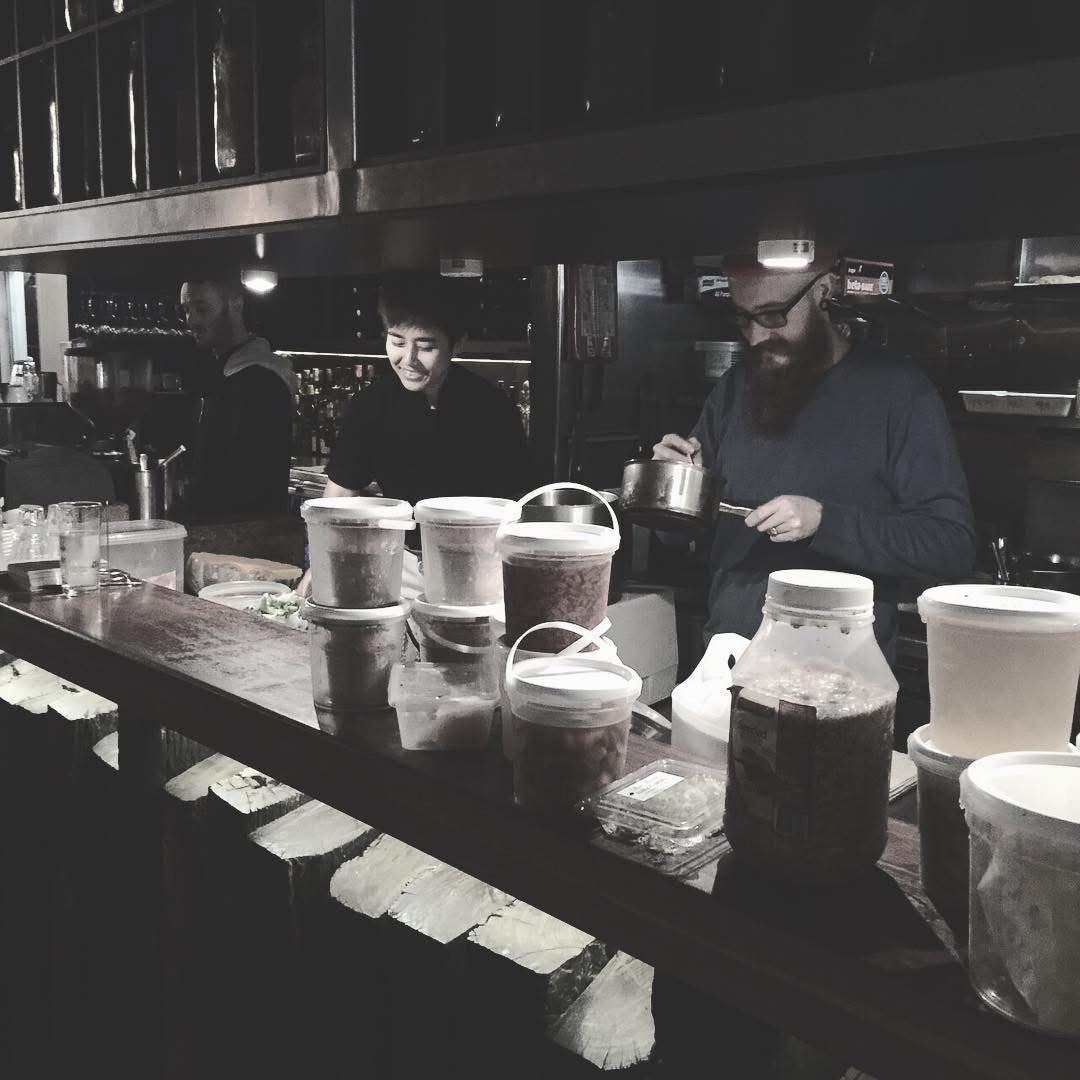
Her first Thai kitchen abroad was Sailors Thai in The Rocks, part of David Thompson’s world. She arrived at the tail end of his era there, when crews from Nahm in Bangkok and Sydney still crossed paths.
The restaurant felt like two worlds under one roof: canteen-style Thai for lunch downstairs, fine-dining Thai upstairs at night.
Every morning started the same way: check the bookings — a hundred, a hundred fifty covers — then prep everything from scratch. Coconut grated by hand. Curry pastes pounded fresh. Sauces simmered until they were right or thrown away.
“It was really fine dining,” Nate recalls. “We made every sauce ourselves, every curry paste. If something went on the plate, it had to be good enough to deserve being there.”
To move up the line, she had to pass quiet but brutal tests. Before she could run cold station, she had to prove she could make la tiang — an ancient Thai snack woven from an egg lattice — using only her fingers over a hot, wide pan.
“You have to make it into this thin lace, like khanom la,” she says — a Southern Thai sweet made by hand-drizzling batter into impossibly fine threads. “Only when you can do that by hand, then you can move yourself up one level.”
Outside Thai kitchens, she chased Western technique. She staged and worked at places like Bloodwood – Restaurant & Bar in Newtown — modern Australian, system-heavy, all about layers. She also spent time under Josh Niland, now known for his whole-fish philosophy and books, in kitchens where every part of a fish had a purpose.
“In Australia, the kitchens are full of people who really studied this,” she says. “Every plate has many layers. We teach each other to get better.”
Those nine years became the blueprint for how she runs her own kitchens now: Thai at heart, organized with Western precision.
“Today I use all those Western techniques in my Thai restaurant,” she says. “From technology to the flow of the line — everything.”
If Australia was structured, New York was chaos. Nate didn’t come for a job or fame; she came because of a relationship. Her partner was in New York, struggling to run a noodle shop alone.
Landing in New York hit like a punch.
“I still haven’t recovered from it,” she says, half-laughing.
“In Australia, the whole country was maybe twenty million. But New York City alone already feels like more,” she says.
She watched her partner drowning in work, stressed and alone.
“I felt sorry for her,” she says simply. That mix of love and pity tipped the scale. She gave up her Australian PR and started over in a place she wasn’t even sure she liked.
That gamble became the first chapter of her New York story.
On paper, she had nearly a decade of fine-dining experience and a rigorous Australian resume. In New York, none of it seemed to matter.
“I couldn’t bring my ‘Australia self’ here,” she says. “Kids who’d been in America for just a month looked more acceptable than I did.”
She made just a fraction of her Australian income — and felt invisible in kitchens that didn’t know her story or her skill. Instead of quitting, she treated it as the admission price for entering a new city.
Eventually she realized that the first kitchen wasn’t where she belonged. She moved on and entered a high-end Thai restaurant known for its ambitious approach where she met someone who finally matched her frequency.
“It was the first time I met someone who thought like me,” she says. “Thai flavors, Western structure, fine-dining rhythm.”
It proved that the hybrid world she carried from Sailors Thai and Australia could exist in New York too. She stayed just long enough to absorb what she needed — and she moved again.
Nate stepped into “big system” kitchens — hotels with corporate structure, Japanese kitchens with strict precision, and high-volume operations where consistency mattered as much as creativity.
“I went back into my usual track,” she says. “But after a while it felt boring. I stayed about six months and then left to become a consultant.”
Consulting became the bridge between her hospitality degree and her culinary life. She wasn’t just cooking anymore; she was diagnosing.
She rebuilt menus for small, boutique Thai restaurants to big chains in New York. She helped mid-range Thai spots rethink their structures, worked with Chinese kitchens in Chinatown, refreshed menus for Japanese establishments, and even stepped briefly into corporate-driven pan-Asian concepts just to rewrite an entire menu cycle.
“A restaurant has to make a profit,” she says. “The menu has to answer that. You have to know the nature of the place — what can really sell and what can’t.”
Her background in tourism and hotel management finally clicked into place: understanding guest behavior, balancing food cost, and designing menus that move both emotion and numbers.
“Analyzing guest behavior really helps,” she says. “I’ve used that skill from the very beginning.”
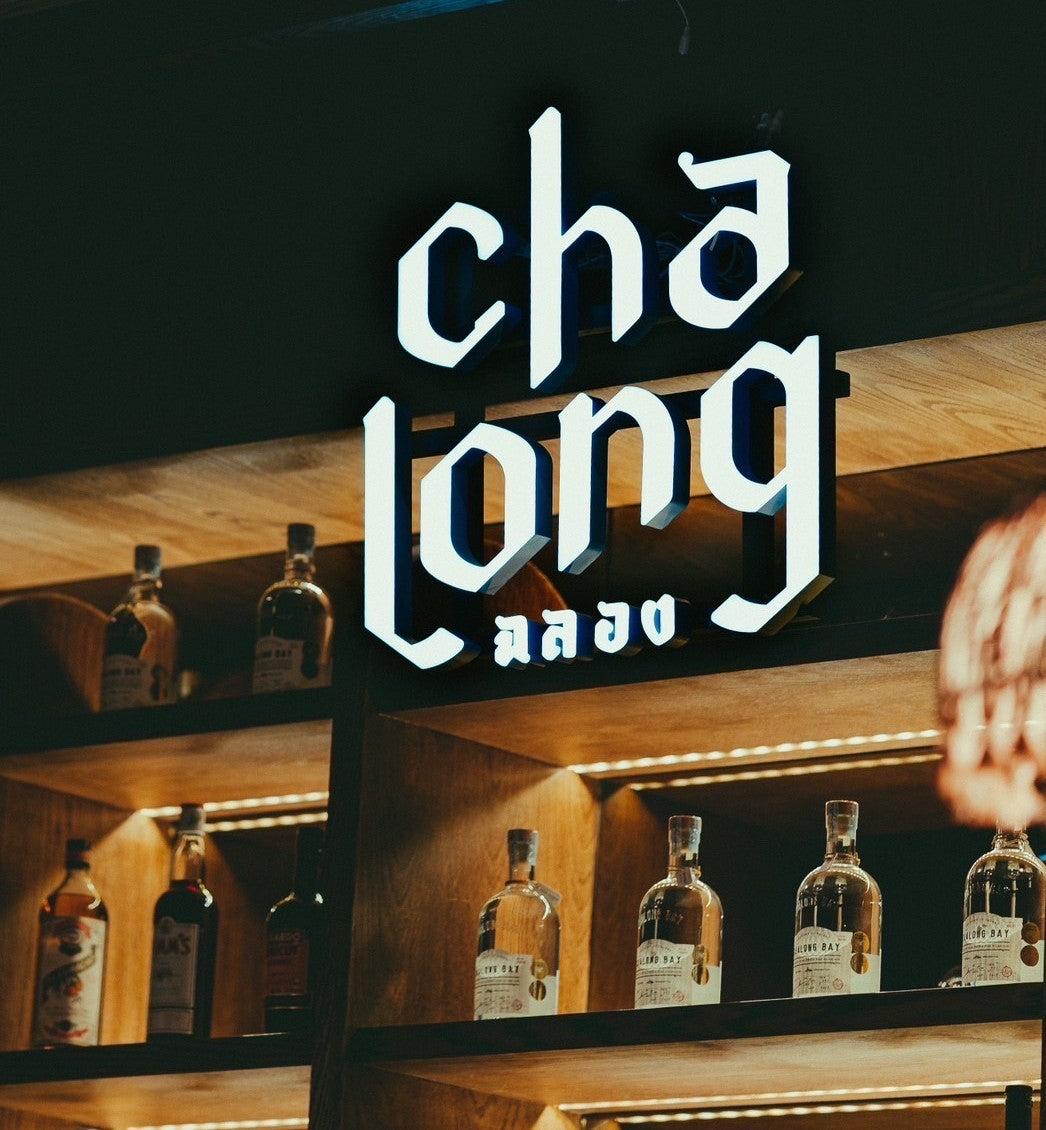
Right before Chalong, the plan wasn’t New York at all — it was Surat Thani.
She, her partner, and his younger brother — all trained in food and hospitality — were going to move back and open a restaurant. She started taking consulting jobs in Surat Thani, using them as a sandbox to test recipes and concepts for a future opening.
“The plan was to develop recipes for about two years so we could open in Thailand,” she says. “We’d already scouted locations… then COVID hit.”
The pandemic crushed that timeline. Borders closed. “Later” disappeared.
“We had to fold the whole project and put it away,” she says. “So it became: okay then, we open here instead.”
“Here” became Chalong.
At first, the idea looping in her head was simple: moo krata, Thai tabletop BBQ.
“Should we just open a moo krata place? That thought kept circling in my head,” she says.
Ask a Thai person “What should we eat tonight?” and moo krata is the default answer. But on Ninth Avenue, in Midtown, she knew that answer on its own might not land.
So she asked herself a harder question: What am I truly best at?
“The thing I’m most skilled at is Southern Thai food,” she says. “I’m from the South, and there wasn’t really a proper Southern Thai restaurant here. If we did it well, it could work.”
She didn’t want Chalong to be so aggressively Southern that it scared people off — especially on a tourist street where most customers only know the “Thai greatest hits”: green curry, massaman, pad see ew, fried rice.
“When it’s a busy street with tourists, they barely know dishes like crab curry,” she says. “They only know the classics.”
So she designed a journey instead of a wall.
Chalong’s menu runs from Bangkok down to the South — a gradient from familiar to fiery.
“We start from Bangkok and travel down South,” she explains. “That way we can welcome customers who can’t yet handle the full-on Southern heat.”
The real challenge was getting the right people through the door on a crowded, chaotic avenue.
“I always believe food chooses its own customers,” Nate says.
So she let Chalong be exactly what it wanted to be: a Southern-leaning Thai family table in the middle of Midtown, designed so that every table naturally has sour, salty, and sweet in balance.
“We make it family-style so the table naturally has sour, salty, sweet all present,” she says.
From there, the food does the choosing.
Most guests walk into Chalong thinking they already know Thai food. Nate gently disagrees.
“American guests — you can’t quite say they don’t know how to eat Thai food, but they also don’t really know,” she says. “Our job is to explain what should be eaten with what.”
That education starts with the menu, but it lives in the servers. To her, front-of-house is part of the architecture, not just plate carriers. She prefers to hire Thai staff when possible.
“Before dinner we go over everything: what we have, specials, allergies, selling points,” she says. “We make sure both the front and back of the house know it all.”
After service, they regroup to review feedback, mistakes, and adjustments.
“In the evening we review where we slipped up, what certain customers said,” she says. “We fix something every day.”
One of the biggest adjustments for New York wasn’t flavor; it was texture.
“Most Western and Thai sauces have a lot of bits in them — they’re not smooth, they coat the tongue in a rough way,” she says. “But in Western cooking, if it’s a sauce, it should feel silky.”
“Every curry, every sauce we put on a plate has to pass through a process that makes it velvety,” she says.
The result is pure Southern flavor expressed with a kind of French smoothness — a direct echo of her fine-dining years.
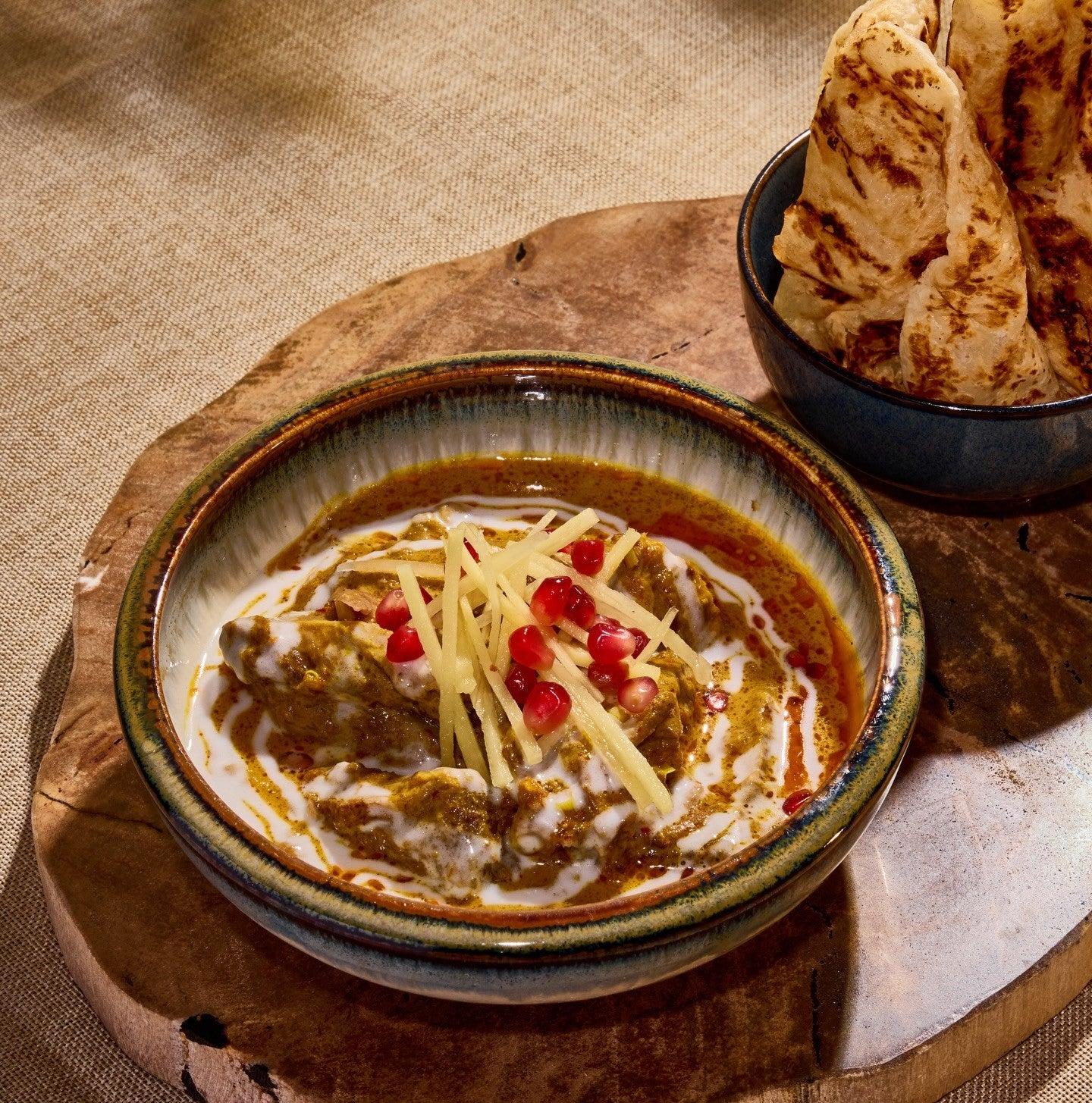
Ask Nate to define Southern Thai food and she doesn’t give you one answer; she gives you a map: local Southern dishes like kua kling and tai pla, Chinese-Southern dishes like moo hong, Malay-Muslim dishes, a touch sweeter, like goat curry.
Right now, the dish she’s proudest of isn’t the obvious crab curry.
“If you ask what I’m proudest of right now,” she says, “it’s my goat curry.”
She first fell in love with it in Hat Yai, at a Muslim stall with huge pans of stewed meats — goat, beef, cow’s feet, oxtail. Back in her own kitchen, she tried to recreate it and failed, over and over.
“I poured out about two whole cases before I was satisfied,” she says. “It was always missing something, or the smell was still gamey. I secretly threw it away.”
Instead of lowering the bar, she went to learn the dish from the inside — not in a school, but in someone’s home, a friend’s relative.
Over time she developed her own method: goat from Australia or New Zealand only, young animals raised on a single type of grass, then treated so the funk disappears but the soul remains.
“Today there’s a technique that lets us remove the goatiness,” she says. “We order goat only from Australia or New Zealand, at a specific age, raised on one type of grass its whole life.”
If Chalong is a journey from Bangkok to the South, the goat curry is the point where Nate herself steps clearly onto the map.
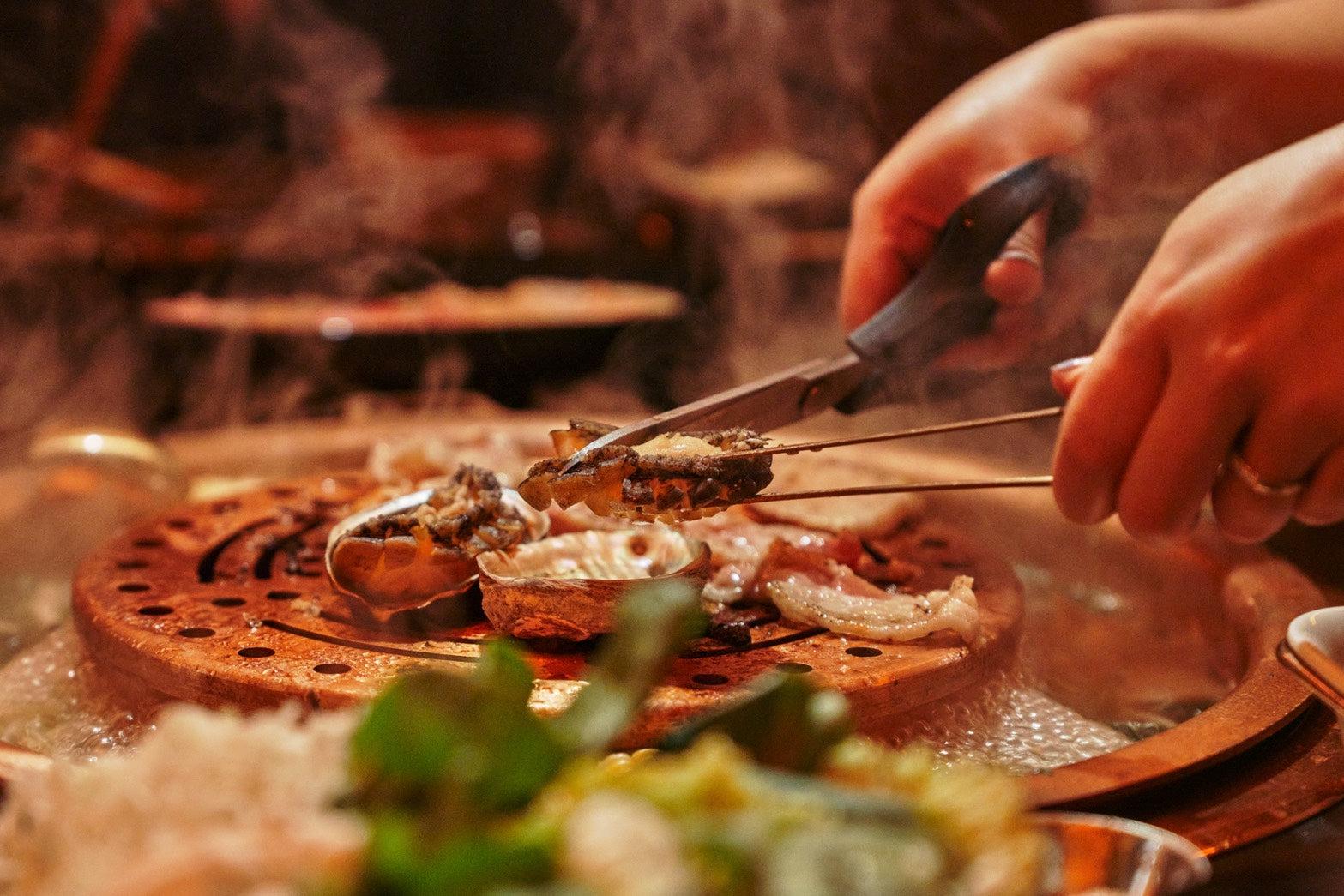
On some days, crab curry and goat curry move so fast the kitchen can barely keep up. Behind the laughter in her stories is serious hardware: huge stockpots, reinforced wiring, and a line built like a small factory.
“If the burners aren’t enough, then we buy more burners,” she says. “Chalong has a stronger electrical system than most Thai restaurants. Here we can install a lot more equipment. Those big stockpots pull a lot of power, so we had to change the wiring. Otherwise, we simply couldn’t keep up.”
For Nate, earning a Michelin Bib Gourmand wasn’t a finish line.
“It’s not really about being ‘Michelin’ — it’s just a Bib,” she says. “But if you ask whether every element in the dish is honest with the customer? Yes.”
On a dense Ninth Avenue block, the tiny, low-volume model of a classic starred restaurant doesn’t make sense. What she refuses to compromise on is ingredient quality and honesty.
“If we can’t get fresh kaffir lime leaves here, I’ll order them from California,” she says. “A lot of fresh ingredients get shipped across states so we can make it the best it can be.”
Every curry paste — for crab curry, goat curry, kua kling and more — is still made in-house. The tool has changed, not the standard.
“With the volume here, we simply can’t pound everything in a mortar. We’d never keep up,” she admits.
She invested in industrial blenders for curry pastes, then spent time adjusting recipes, speeds, and textures until they matched what she used to get by hand. Only then did she let the machines replace the mortar.
“People love to argue that pounding and blending are different,” she says. “And they are. But in the end we have to choose a method that lets us supply our customers while still controlling flavor and quality.”
All of this runs on what she calls deep prep: mise en place built so each dish can leave the kitchen in 10–12 minutes. A seemingly simple dish like moo hong takes a full day — blanching, long braising, skimming fat, reducing stock, then glazing the pork again.
Her Australian years also taught her to think about equipment, not just knife skills.
“I almost never saw Thai restaurants using combi-ovens,” she says. “Even though they help so much when labor is expensive. You need machines to help control quality.”
Now, combi-ovens are a quiet signature of her kitchens. Wherever she consults, she programs them for duck, chicken, stocks, stews — so human hands can focus on marinating, seasoning, and balancing the final plate.
Moreover, Nate’s strictest attention is often on things that look tiny from the outside: shrimp paste, sugar, and a few quiet machines in the corner.
“There are plenty of brands of shrimp paste in the U.S. but only a few are really usable.” At Chalong, she blends two brands to get exactly the aroma and depth she wants.
Sugar gets the same treatment.
“I’ve walked markets and bought almost every kind of sugar,” she says. Some lean sour, some bitter. Some have too many additives. If it doesn’t give her the clean sweetness she’s looking for, she drops it.
In the kitchen, there are flavor meters — tools to measure sweetness and salinity so that when a new delivery of fish sauce or sugar tastes slightly different, the dish doesn’t swing with it.
“All this is to keep the flavor the same,” she says. “In the end, it’s for the customers who come back and want the dish to taste just like last time.”
In a city where prices jump, supply chains tangle, and even humidity changes how ingredients behave, she uses both her own palate and literal numbers to protect one thing: the memory of a returning guest.
“We have to use tools like this to control quality. And they work — you can see it in how we meet demand.”
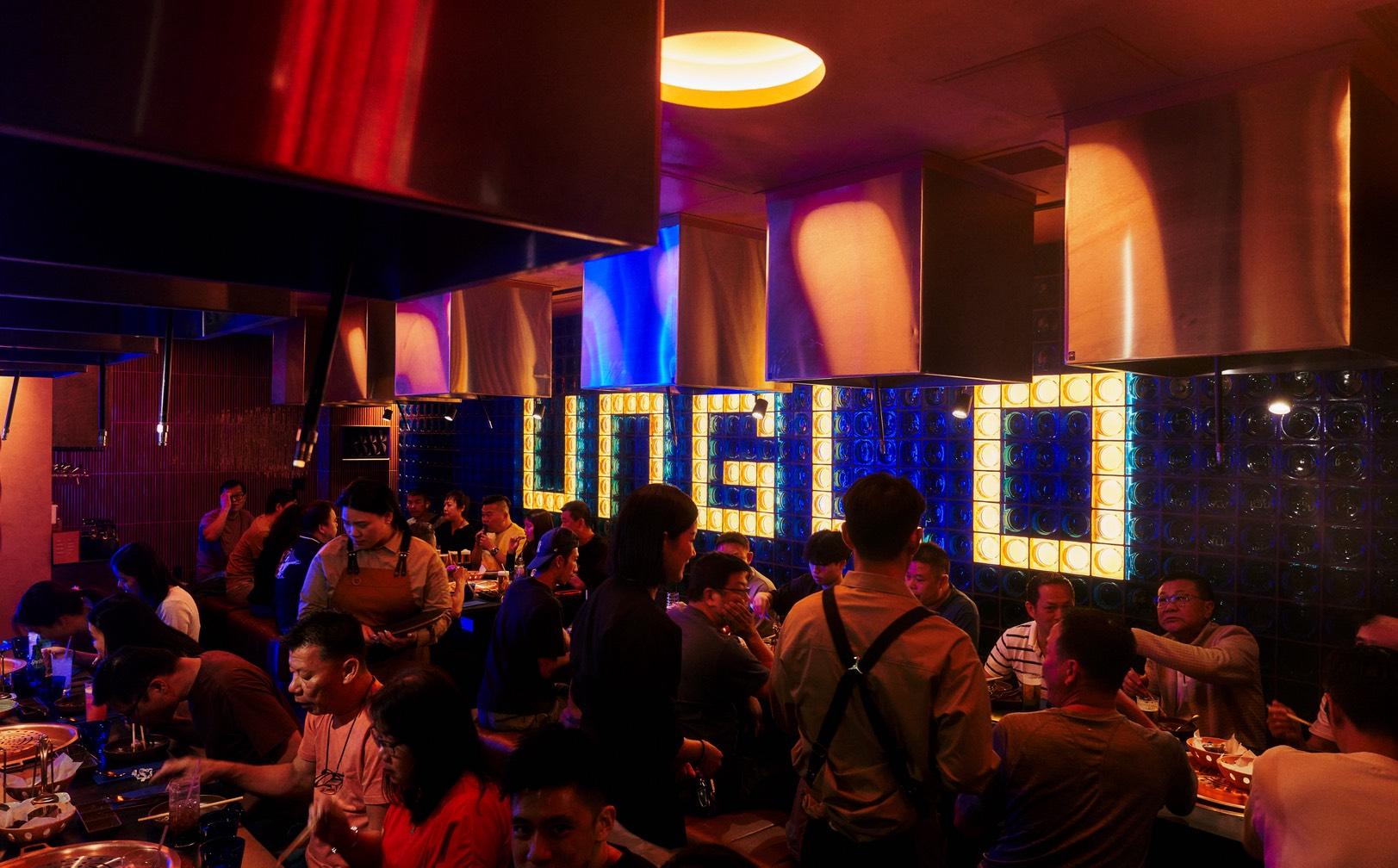
Today, Nate’s universe is no longer just Chalong. Two newer concepts — Unglo and Godunk — extend her ideas into very different rooms, each with its own mood and rhythm.
Unglo takes the moo-krata idea that used to circle in her head and gives it its own stage.
Opened on the Upper West Side in September 2025, Unglo is one of New York’s first upscale takes on Thai moo-krata — a hybrid of Thai BBQ and hotpot.
“It taught me how far people are willing to go to understand a new format,” Nate says. At first, guests unfamiliar with Thai BBQ needed guidance — where to put what, when to dip, when to eat. Over time, Unglo became a place where New Yorkers learned that Thai tabletop cooking could feel as intentional and polished as any other ‘special night out’ cuisine.
If Chalong teaches people to eat Southern Thai family-style, Unglo teaches them how to play with Thai BBQ in a refined setting.
Where Unglo is ritual and fire, Godunk is movement and noise.
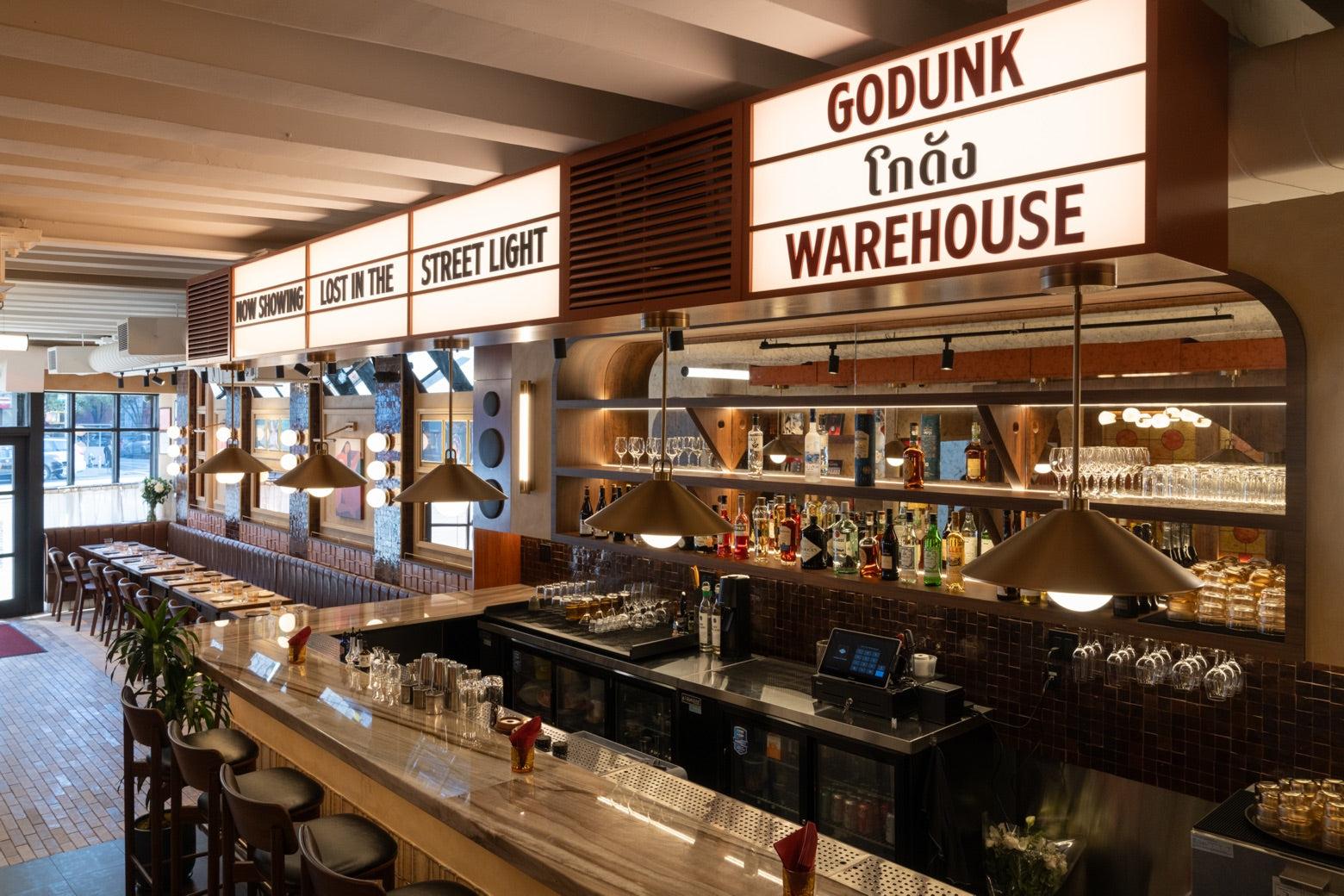
The menu reads like a reel of Thai cravings: Nahm Tok Wagyu Noodle Soup, hamachi in spicy seafood lime sauce, Kai Jeaw Poo Kung (crab and shrimp omelet), dry-style noodles, seafood tom yum. The cocktails follow the same script — film-inspired, Thai-flavored, more scene than background.
If Chalong is the serious family table and Unglo is the ritual firepit, Godunk is the street — edited, lit, and scored for the city.
Across all three, the tone shifts — but the axis is fixed: a team that grows together, and flavors that refuse to lie.
Michelin floats around Nate’s story — restaurants she’s touched, the Bib beside Chalong’s name — but she stays strangely calm about it.
“I’m really indifferent to it,” she says. “What makes me proudest is that Chalong serves dishes you can’t find anywhere else.”
Her long-term dream, though, is sharp: she wants to see true Thai fine dining in America.
“Wanting to be fine dining is one thing,” she says. “But the management side matters. If your margin is tiny or negative, the restaurant simply can’t survive.”
She plans her life in one-year arcs. The next phase, she says, is about learning again — short chef courses she’s been invited to, including programs focused on ingredient selection across cuisines, possibly in places like Hong Kong.
“Then the year after that, I’ll go hard again,” she says. That’s when she imagines building a fine-dining project that works not just for her, but as a blueprint for other Thai chefs in the U.S.
“It takes serious capital and a very long view to make true fine dining happen in the U.S.,” she says — and she’s playing the long game.
Chef Nate didn’t get here through shortcuts. She got here through survival, migration, self-reinvention, strict standards, and a refusal to lie to herself or her guests.
Chalong is her discipline. Unglo is her moo-krata manifesto. Godunk is her cinematic street-food stage.
Together, they mark her as one of the quiet forces behind New York’s Thai food renaissance — a chef whose story is still being written.
📖 Chef Nate Limwong
📍 Chalong NYC — 749 Ninth Ave, New York, New York 10019
📷 Follow @natwalan_lim @chalongnyc
#ChefChaCha #EveryThai #ChefNate #ChalongNYC