
Loading page
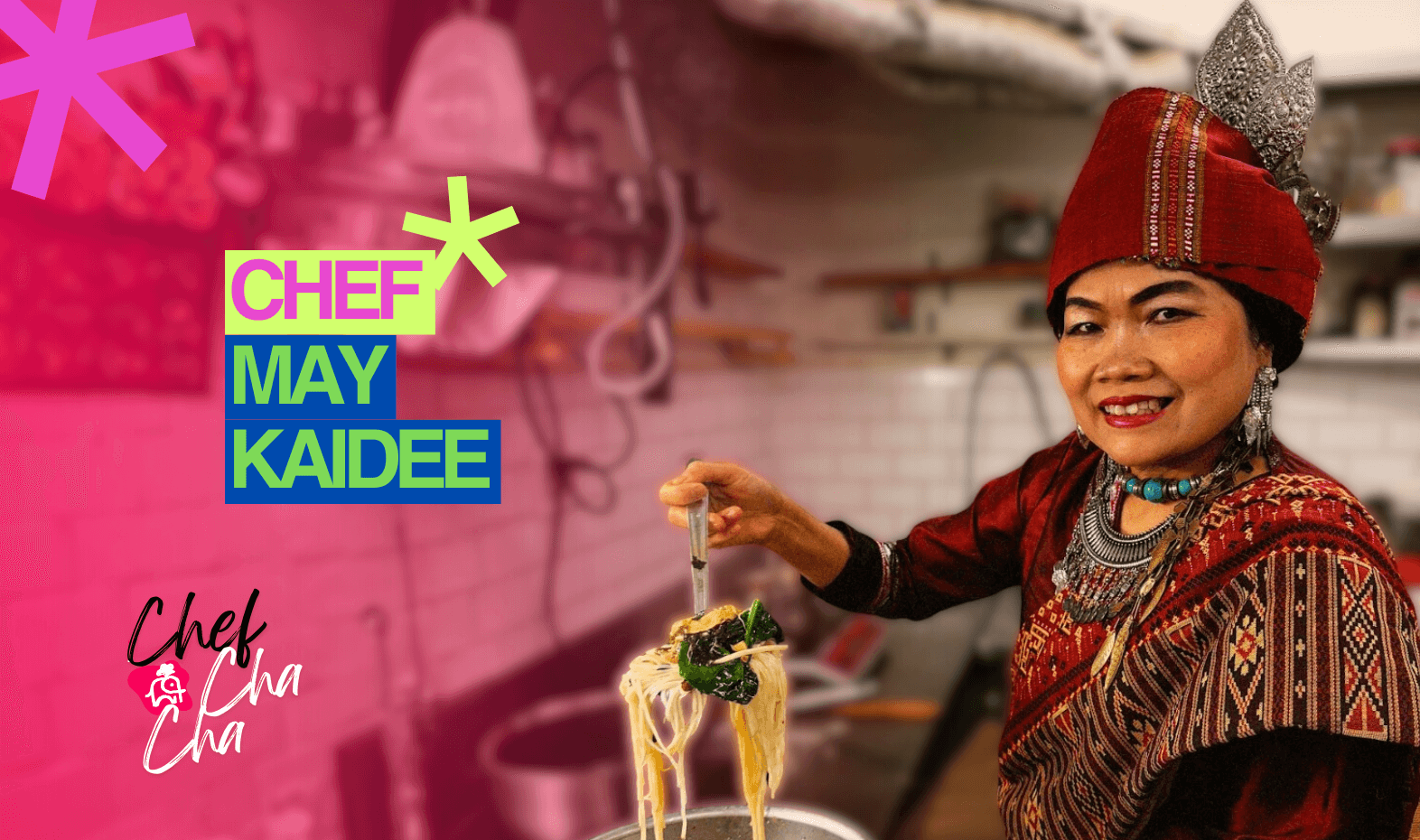
Mar 3, 2026 · 1 min read
Long before New York knew her name, May Kaidee was a farmer’s daughter in Sisaket — a province in northeastern Thailand.
She rode buffalo into the rice fields. Sometimes she sat on her father’s shoulders. Sometimes she followed behind as he led the animal across mud and water.
“Farmer’s child. Real countryside,” she says.
Food wasn’t a hobby. It was life: sticky rice by the charcoal fire, pla ra (fermented fish) roasted in bamboo, wrapped in banana leaves, and warmed over the flames. Frogs, toads, snakes — whatever the countryside offered.
“That’s countryside life. If I could go back to that atmosphere, I’d be so happy.”
Those flavors became her permanent memory bank. Even today, when she misses home, she recreates it in her own way — gaeng om, once made with frog in her mother’s kitchen, now made with mushrooms and seaweed.
“When I cook it, I feel like I’m back home.”
School wasn’t her place.
“I didn’t want to study. I was scared of homework. My brain felt stiff.”
But sports were different. She became number one in table tennis at the sub-district level and later represented her province in volleyball. Teachers didn’t need to persuade her—she was already in the field.
“I’m not ordinary, you know.”
She also had a hustler’s nerve early. She joined the school cooperative and earned small percentages running errands for classmates—an instinct she describes simply as business instinct.
And she entered a singing contest in Grade 6 for a reason that’s both funny and revealing: the prize was fish sauce.
“I wanted fish sauce… to help my mom reduce the household cost.”
People mocked her, but she entered anyway. That’s the pattern: she moves first, even before confidence arrives.
After finishing school, she chose to farm rather than continue her studies.
She walked village routes—five kilometers there and back—selling what her mother grew. If she wanted pants for the annual fair, she earned them.
“If you want something, you have to earn money.”
She caught frogs in the fields with unusual skill—finding them even when hidden, even diving into water to grab them.
“I’m not ordinary,” she repeats—now with pride.
Then Bangkok arrived, the way big changes sometimes arrive in her story: through a dream.
“I dreamed I rode a train. I had never ridden a train.”
At fourteen, she packed a pillow, mosquito net, rice, and a rice steamer—sticky rice was non-negotiable—and took the train to Hua Lamphong, Bangkok.
She went to help her aunt near Khao San Road, who ran a restaurant and needed extra hands.
At first, she worked as a childcare helper, taking care of the baby. Then she sold kanom jeen (Thai fermented rice noodles with curry) at a nearby shop. Only later did she move fully into her aunt’s restaurant to work in the kitchen.
She watched everything. She noticed who the customers were. She noticed how they ate. She noticed what the kitchen didn’t do — no fried food, little variety, simple boiled vegetables served plainly.
And she noticed something that mattered more than recipes: even when operations were weak, customers still came.
That observation became her first real lesson in business.

Here’s the part people miss: before she became vegan/vegetarian by conviction, she lived inside a strict foreigner-facing food world.
Back then, she wasn’t a vegetarian.
But if she ate meat or eggs, she hid it.
“If they saw, they’d throw everything away. Eggs—nothing. I had to eat secretly.”
That experience planted the seed: she was cooking “clean” food for others while secretly eating differently. Later, that contradiction became impossible to tolerate.
At some point—early in her own business life—her health forced a reckoning. She describes gaining weight and fainting while working.
“I fainted without knowing what was happening.”
She links it to obsessive eating patterns—when she liked something, she ate only that and didn’t stop.
“When you eat and won’t stop, your stomach expands… it’s a huge consequence—I’m telling you!”
After that, the commitment hardened. It wasn’t only about customers anymore. It was identity.
“It’s like—we cook clean, pure food for other people… so why do we have to eat something like that?”
That’s the line where “diet” becomes belief.
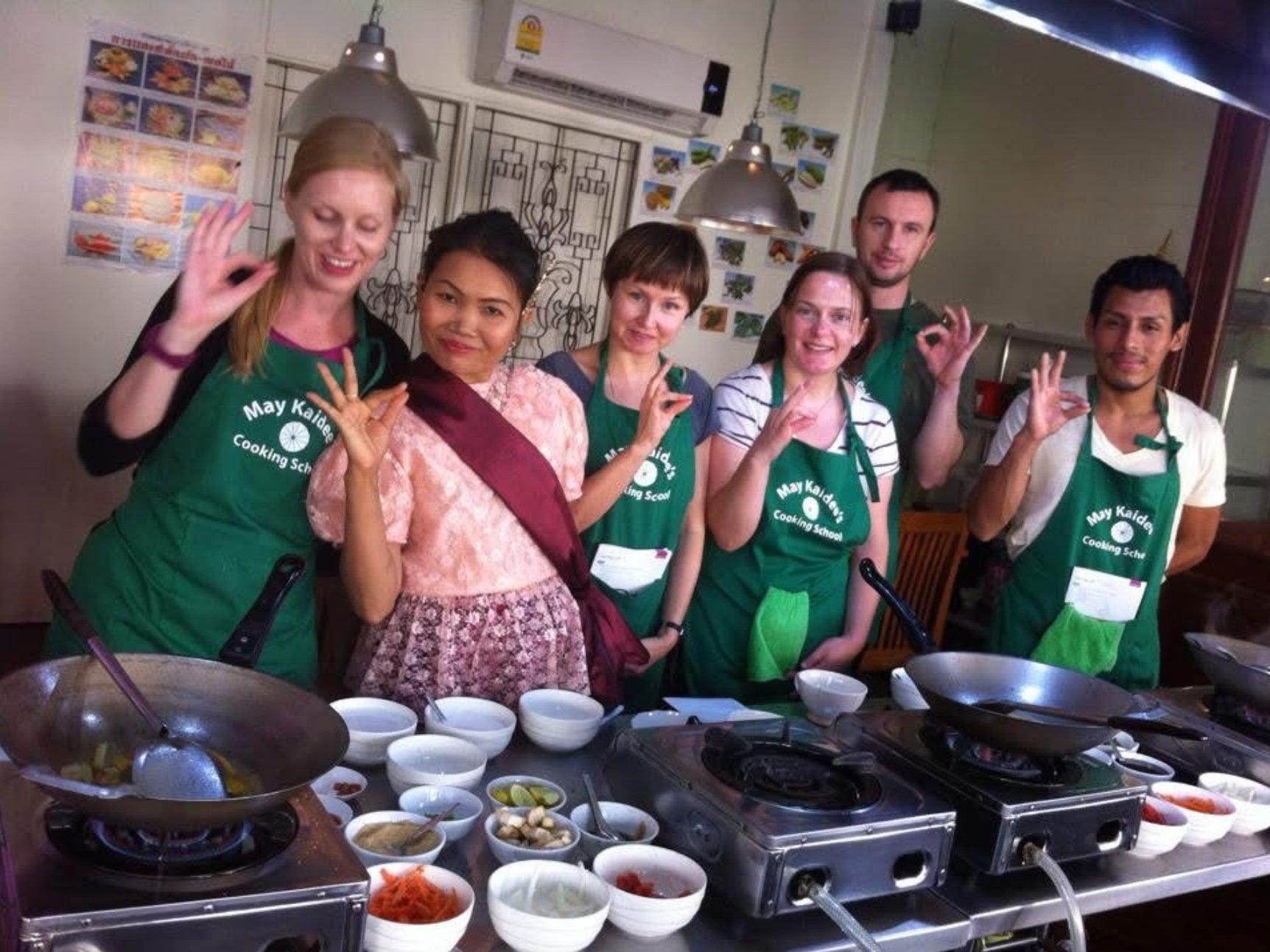
Rent rose. The original situation wasn’t sustainable. And May understood the opportunity: foreigners were there. The demand existed. The food could be better.
“So I thought: I should open my own.”
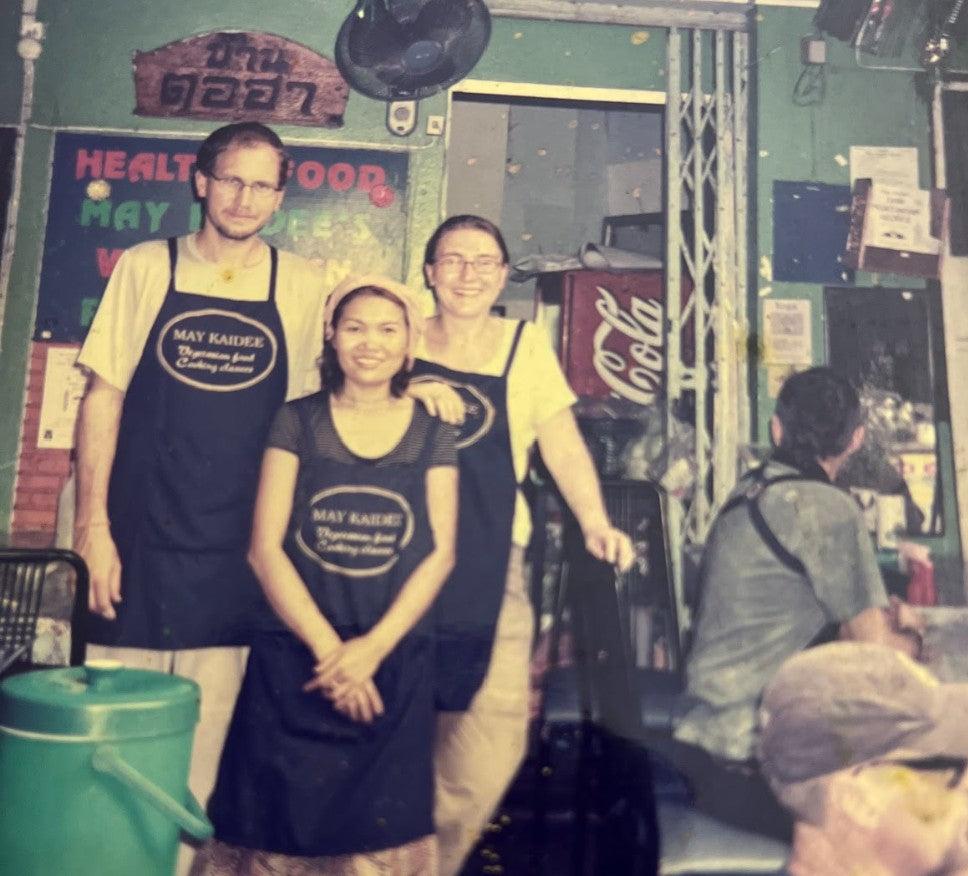
She started next door—tiny, low-budget, almost sidewalk-level. Her pay was small, and she sent money home. She rented space daily and built from scraps.
She didn’t rely on a name, branding, or ads.
Customers followed her.
“Our shop didn’t have a name.”
Word of mouth did the work. Guidebooks later reduced it to a legendary direction: a no-name vegan place “behind Burger King.”
When the rain came, it shut the whole operation down. She had only a couple of tables. Still, she sold.
That was her early entrepreneurship: unstable conditions, minimal capital, constant improvisation.
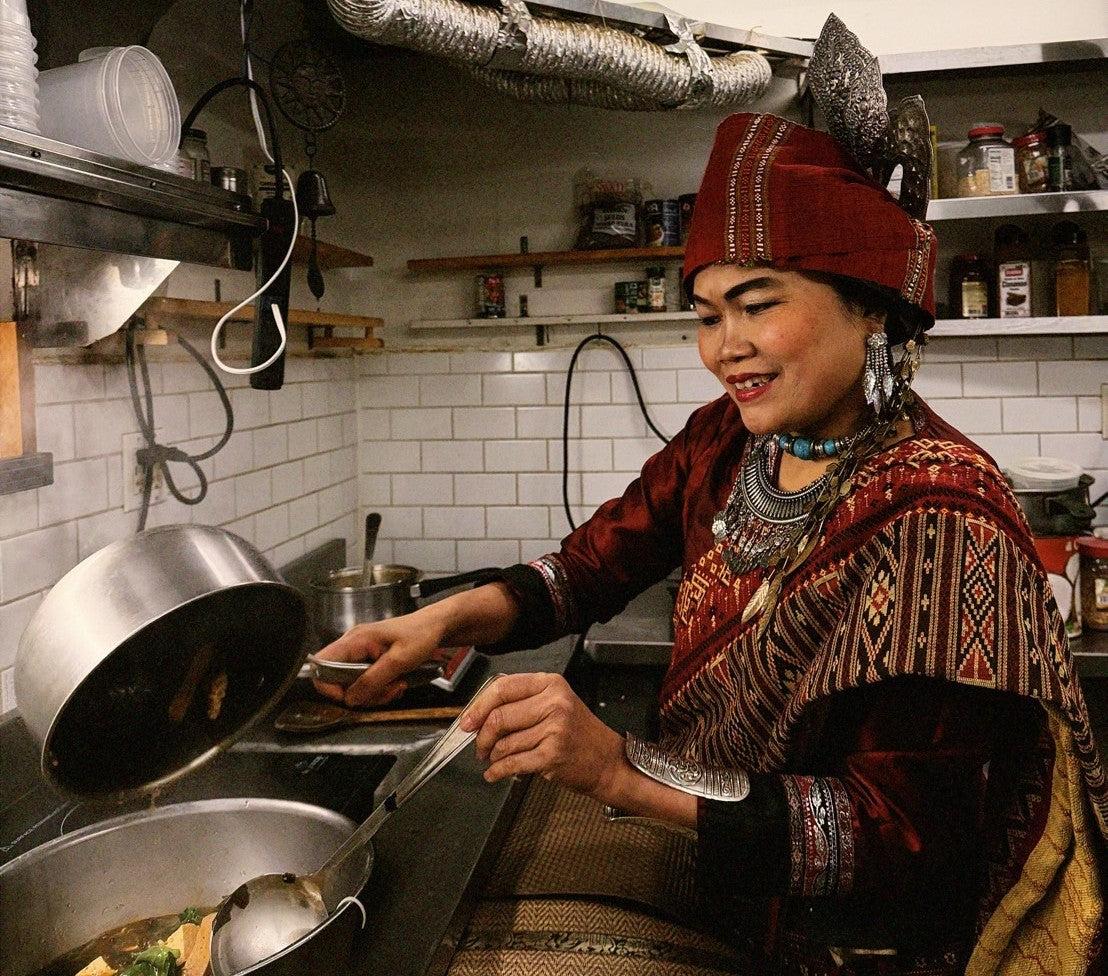
She says she’s into spiritual practice.
The fortune teller predicted she would go to England. She did.
The fortune teller predicted a red car. She ended up buying one—almost impulsively, because someone needed money for childbirth.
Because those predictions happened, she trusted the naming advice too.
When she asked for a lucky business name, the logic became simple and Thai: make the name itself a blessing.
She chose “Kaidee” (ขายดี) — which means “sell well” — as luck embedded into language.
That’s why “May Kaidee” isn’t just a name. It’s a spell: May sells well.
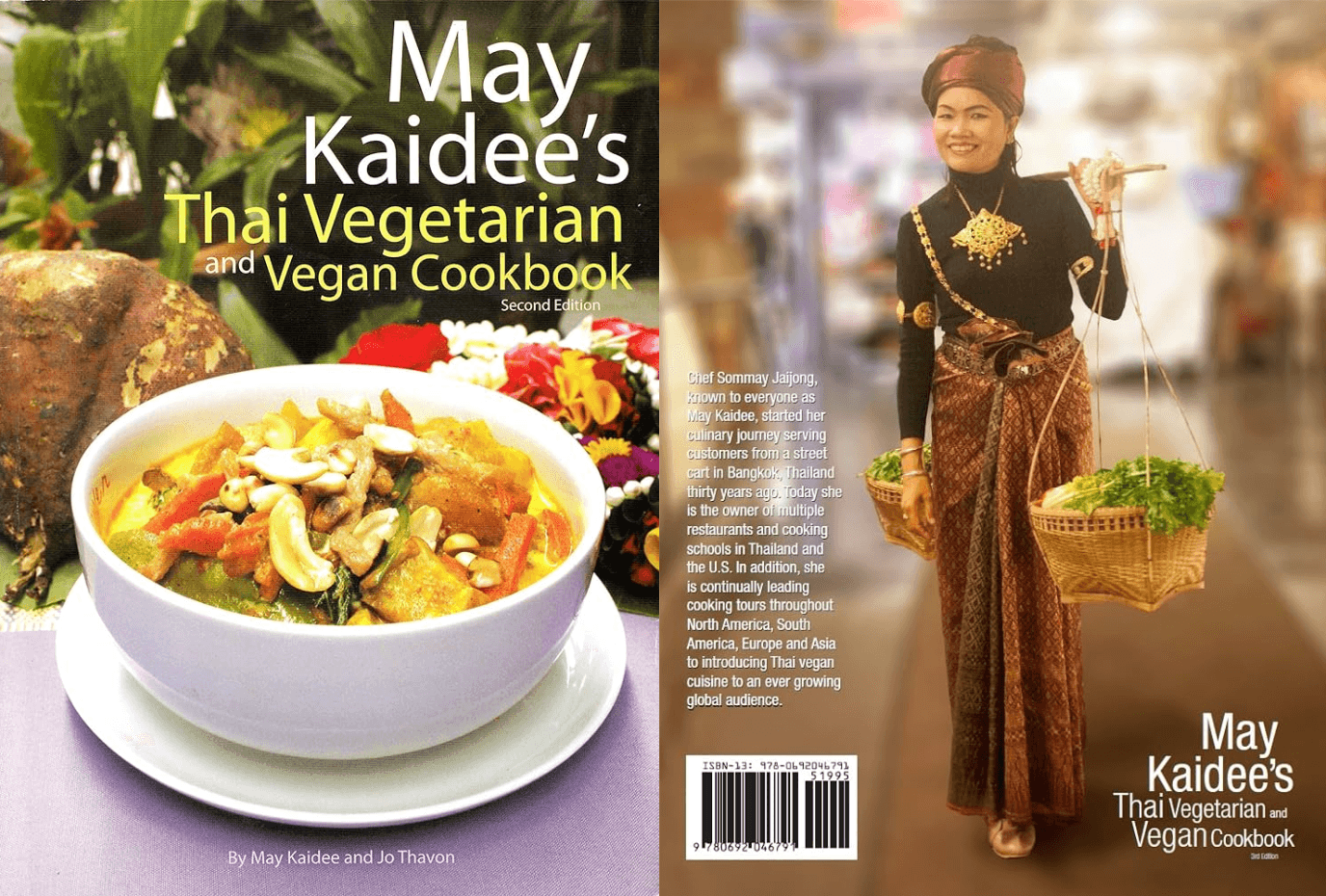
Her cooking classes began early. Customers didn’t just want to eat her food — they wanted to take it home. Not in containers, but in knowledge.
So she made a scrappy handbook — simple, straightforward, practical.
It sold out.
People kept asking for it. The demand didn’t stop.
Then, from her future, someone arrived who would help her do it properly — with photography, production, structure, scale.
She didn’t promise a salary. She offered a bet.
“If it sells, I’ll give you a percentage.”
He worked fast — styling, shooting, compiling. The new cookbook was printed in large volume and sold out again. It became a must-buy souvenir for travelers who came to learn from her.
What began as a practical project became something more enduring.
That collaborator became her business partner.
And eventually, her life partner, Joe.
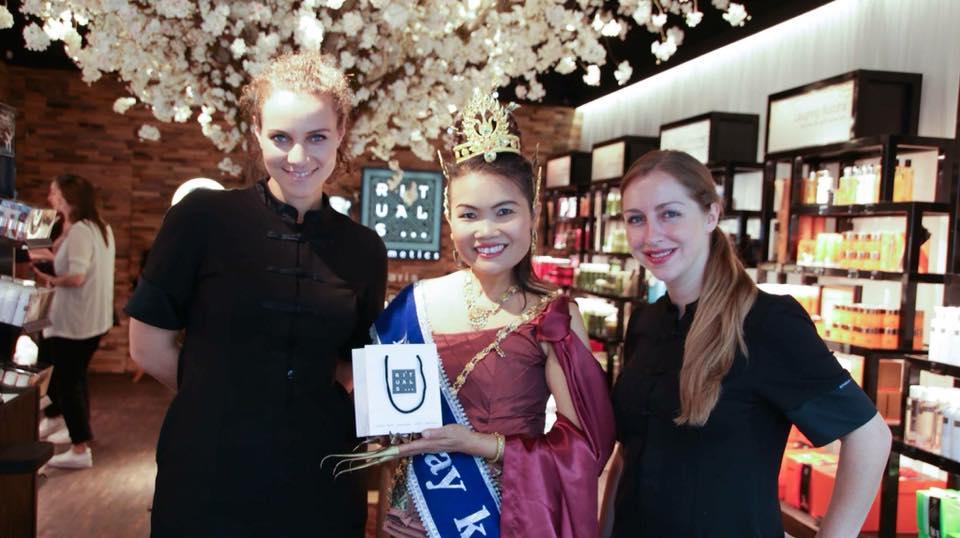
In Thailand, she established staff, attention, and systems. In New York, she had to become the engine again.
“I had to leave behind being a ‘superstar’ in Thailand… and come here.”
The emotional shock wasn’t only about money—it was about identity.
“Nobody knew me… It’s not zero—it’s below zero.”
The restaurant could sell, she says, but the exhaustion was real. She and Joe had no budget for staff, so they did everything themselves.
“In Thailand, we had staff… but here we have to do everything ourselves—Joe and I.”
At one point, she almost went back.
But then something restored her morale: customers who had visited her restaurants in Thailand returned to New York and brought photos—proof that her story was real.
“They brought photos to show me… every day.”
That’s when she reframed her survival strategy: positioning.
“We have to find what’s most important… it’s ourselves… our positioning.”
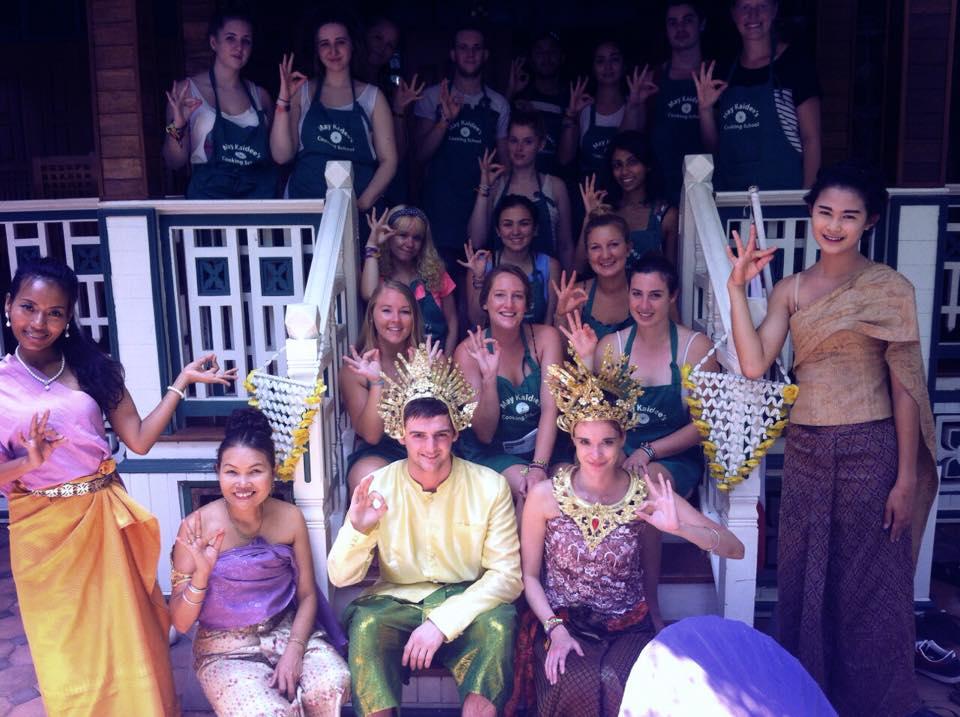
May’s differentiation in New York isn’t just “Thai food.” It’s Thai vegan/vegetarian delivered as a full human experience.
Her restaurant becomes a living room: customers help, regulars serve themselves, strangers become friends.
When she’s overwhelmed, she literally recruits the room.
“I’d tell customers to come help slice pumpkin—help cut vegetables.”
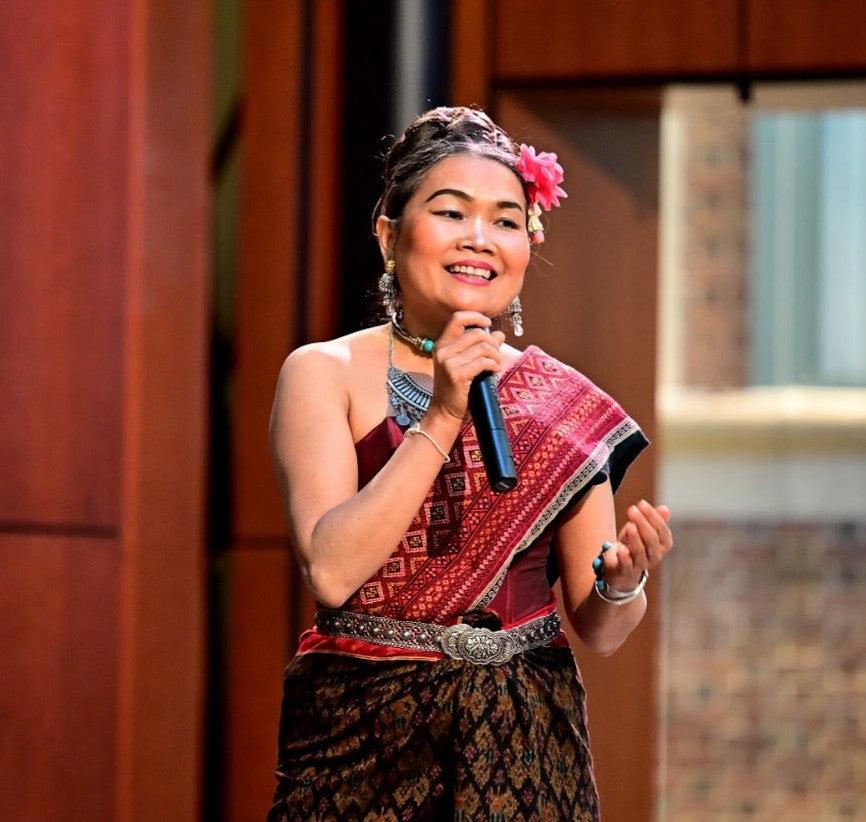
And after the meal, the second act begins: singing, dancing, costumes, hats, jokes, karaoke energy.
Foreigners film her. Shy guests become dancers.
“People who never dance—they come out and dance.”
They don’t just eat. They leave with a memory, which is exactly what she wants.
“That memory—that’s it.”
Thai food, to her, should never be eaten alone. It must be shared.
“I’ll never recommend you eat alone… Thai food must be family-style.”
In a hard city, she built not just a restaurant—but a community theater disguised as dinner.
And she did it while rebuilding her confidence from below zero.
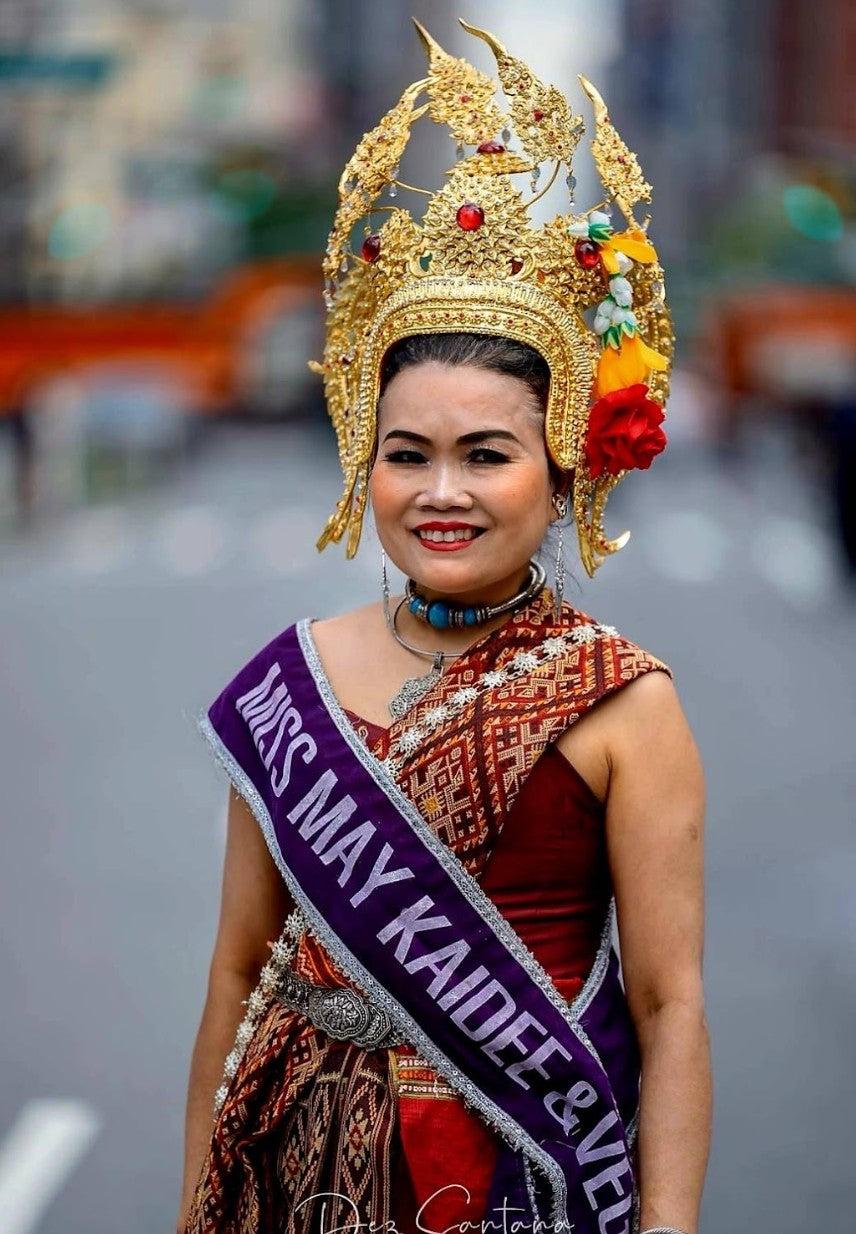
Her story is loud on the surface — dancing, singing, hats, laughter.
Underneath, it’s discipline.
She learned early to earn before she spent, to leave home before she felt ready. She built from scraps. And when New York reset her to below zero, she built again.
“I’m not ordinary,” she says.
She isn’t.
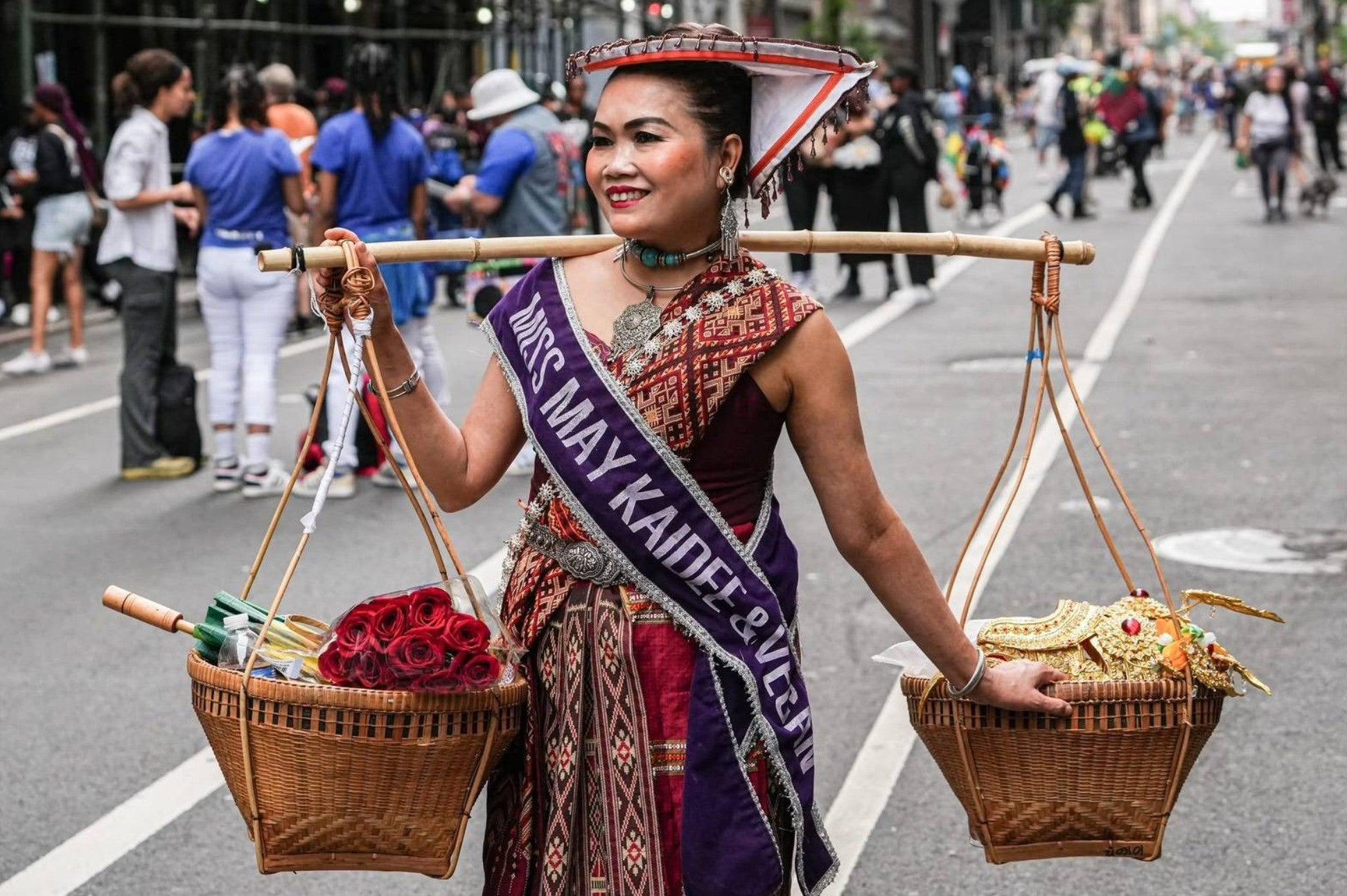
May Kaidee is still the farmer’s daughter from Sisaket — only now she dances in Manhattan.
Walk into her restaurant, and you won’t just eat.
You might be asked to slice a pumpkin.
You might end up singing.
You might leave lighter than you arrived.
In a city that can make anyone feel invisible, she built a room where nobody eats alone.
If you want to understand her story, don’t just read it.
Go. Sit down. Stay late.
And see what happens.
📖 Chef May Kaidee
📍 May Kaidee — 215 E Broadway, New York, NY 10002
📷 Follow @maykaidee
#ChefChaCha #EveryThai #ChefMay #MayKaidee